| |
| Sweet and hot peppers picked November 9th |
Friday, November 9, 2012
Fall Garden Update


Wednesday, October 31, 2012
Favorite Flowers: Snapdragons
 | |
| Lavender and white snapdragons |
Perennial, commonly sold as annual
Full sun, 10 inches - 4 feet
The snapdragon is a cool-weather plant, so now with the pleasant fall temperatures, my snapdragons are blooming profusely again. Since they can tolerate some frost, I plant them early in the spring, generally a couple of weeks before the last spring frost date. They bloom beautifully all spring and into the early summer. Then I trim them back, water them well, and see little from them until fall, when most will resume flowering.
Snapdragons are available in a wide range of colors, just about everything but blue, as well as softly-shaded bi-colors. They bloom along a flower spike, opening gradually from the bottom upwards. They have a light fragrance, and attract butterflies. Snapdragons come in various heights: dwarf ones that grow to about 10 inches, medium at about 18-24 inches, and tall that may reach 3-4 feet. I generally prefer the dwarf snaps, as they fit better into my flowerbeds, don't require staking as do the taller ones, and come in the largest choice of colors.
Saturday, October 27, 2012
Getting Ready for Winter
 | |
| Peas, marigolds and parsley in late October |
As flowers and vegetable plants die, I remove the dead plants, so they don't harbor insect pests or diseases over the winter. Perennial stems I cut back to ground level. A few things that offer valuable food for local birds, such as coneflowers, I leave until spring. Healthy plant stems and leaves can be shredded or chopped and added to compost, but anything that may have had any disease or pest problems should be put in the trash. I also watch out for any kinds of seeds. If your compost pile doesn't get hot enough, disease organisms, weeds, and seeds may not be killed during the composting process, and you'll just be multiplying these problems.
Monday, October 15, 2012
Favorite Flowers: Pansies

Hardy Perennial, generally grown as annual, zone 4-8
Full sun, 6 - 9 inches
One of my favorite fall traditions is pansy planting time. Pansies are a classic fall and winter flower for the southern states, in planting zones six through nine. Mine bloom profusely all fall long, off and on in the winter, and then again throughout the spring. They give me flowers at times when everything else is dormant. Every winter I've seen them blooming cheerfully in the midst of snow.
Friday, September 28, 2012
Fall Planting, Part Two
 |
| Fall peas |
With the more reliably moderate weather, I have begun planting some of the fall flowers like pansies, asters and mums. I am careful to get hardy mums, so that I can enjoy them more than one year.
Sunday, September 23, 2012
Cool Nights
Last night the temperature here got down below 50 degrees for the first time this fall. I'd seen the forecast a couple of days ahead, so I knew I'd need to take some action to protect my most tender house plants that have been summering outside. I have quite a few plants that move outside for the summer, and in for the winter. They tend to flourish with all the extra sunlight they get, so I am reluctant to bring them back inside any sooner than needed. Some of them, such as the lemon tree, coleus and geraniums, I particularly try to protect from cold.
Monday, September 17, 2012
Fall Planting, Part One
Fall planting season is coming up. Spring is often when folks think of planting, but for many plants, such as most grasses, trees, shrubs, and perennials, fall is actually the best time to plant. This gives plants time to develop a much better root system before facing the heat and drought of summer. The weather is more moderate in the fall, yet the soil is still warm. This is ideal for roots to grow without the demands of summer weather. Then in the spring, the plant gets another moderate season for growth before the summer heat. Anything planted in the spring gets only one season, with cooler soil, to get established.
Subscribe to:
Posts (Atom)
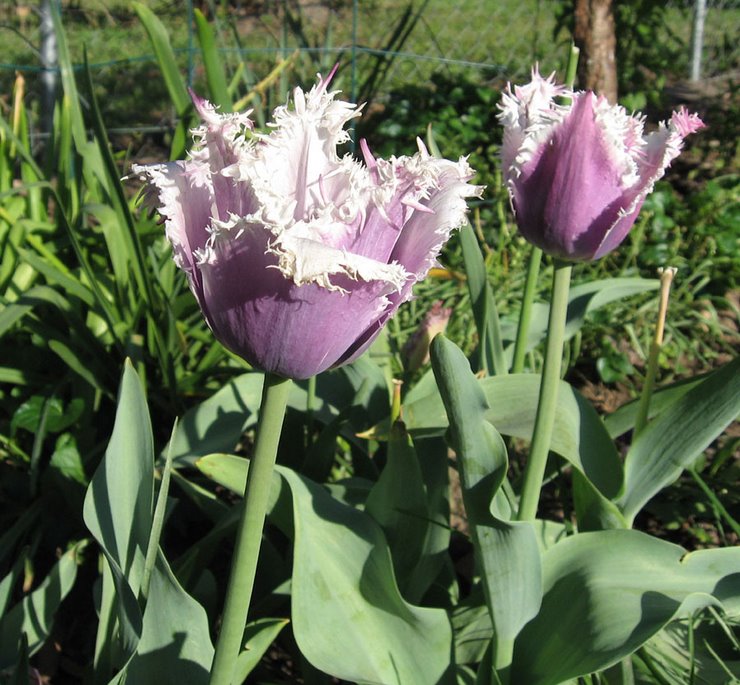
Fringed Tulips